
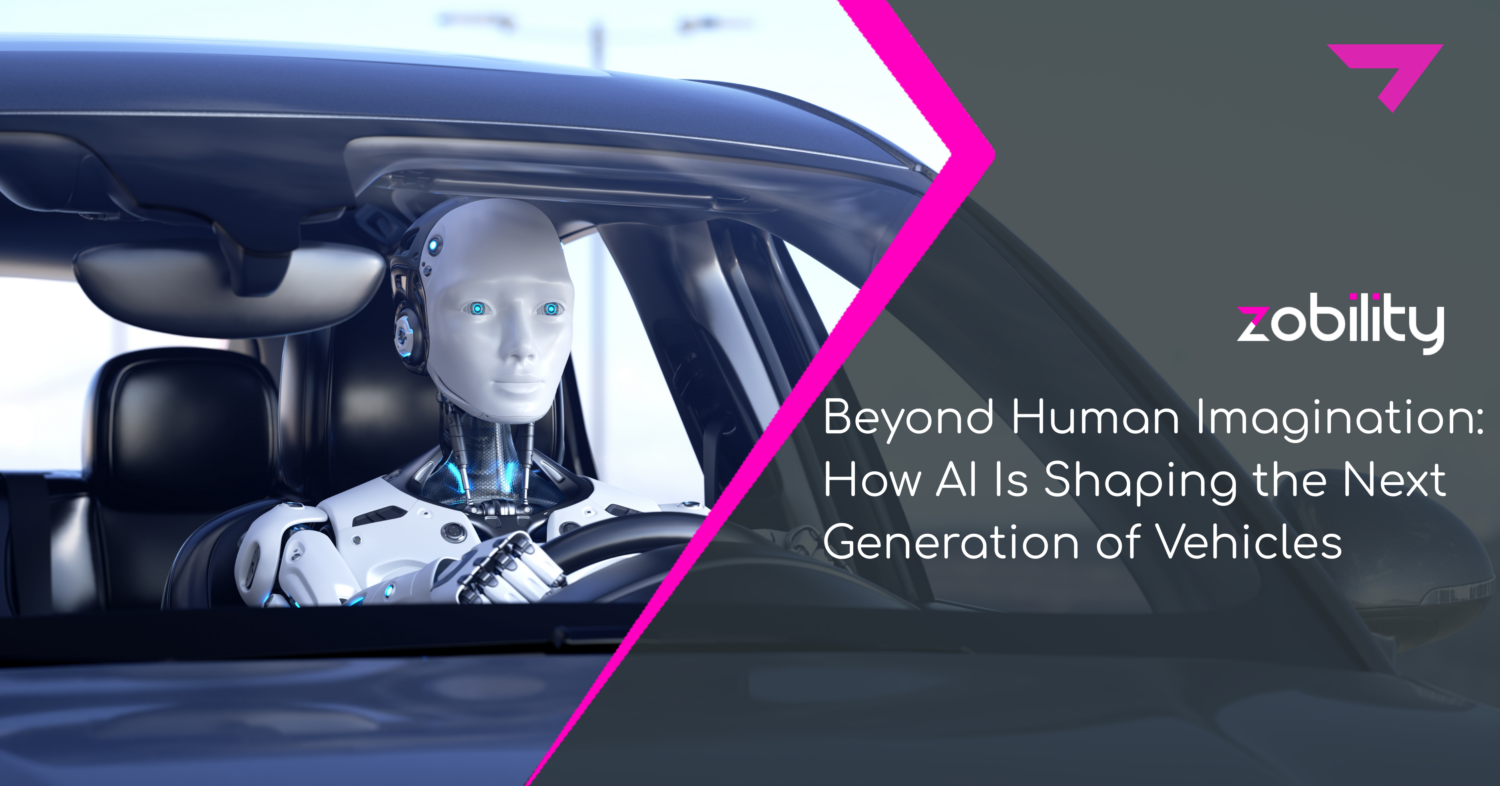
The automotive industry is undergoing one of the most significant engineering transformations in its history.
Artificial Intelligence is now embedded in everything from autonomous driving systems to safety validation and vehicle design. But while headlines often focus on automation and disruption, the real story for engineers is far more positive.
AI is not replacing automotive professionals. It is expanding what they can do.
For engineers, designers, and mobility innovators, AI is becoming a powerful partner helping teams analyze complex data, simulate vehicle performance, and design components more efficiently than ever before.
Let’s explore how AI is transforming three key areas of automotive design and how professionals can stay ahead.
AI in Autonomous Systems: Smarter Vehicles Need Smarter Engineers
Autonomous driving systems are one of the most visible applications of AI in the automotive world. Modern vehicles rely on complex networks of sensors including cameras, radar, and LiDAR to understand the environment around them.
AI models process this massive stream of data in real time, helping vehicles identify road users, interpret traffic patterns, and make safe driving decisions.
But behind every AI-powered system is a team of engineers responsible for building, validating, and improving those models.
For automotive professionals, this creates exciting new opportunities at the intersection of mechanical engineering, software development, and data science.
AI-assisted development is also helping engineers train autonomous systems more effectively. Generative AI tools can now create simulated driving scenarios, allowing engineers to test how vehicles respond to rare or dangerous situations that may be difficult to capture through real-world driving alone.
This allows development teams to evaluate millions of edge cases and improve system reliability before vehicles ever reach public roads.
Career tip:
Engineers working in vehicle systems, robotics, or ADAS development can benefit from building skills in:
- Sensor fusion systems
- Edge AI computing for vehicles
- Simulation platforms for autonomous testing
- Python or machine learning fundamentals
Professionals who understand both vehicle systems and AI-driven software architecture will be especially valuable in next-generation mobility programs.
AI in Safety Testing: From Physical Prototypes to Digital Twins
Safety has always been the foundation of automotive engineering. Today, AI is helping engineers test and validate vehicle systems faster and more comprehensively than traditional methods allow.
One of the most powerful innovations in this space is the use of digital twins.
A digital twin is a highly detailed virtual replica of a vehicle that engineers can use to simulate performance under thousands of different conditions. By combining real-world test data with machine learning models, these simulations can replicate crash behavior, sensor performance, and structural stress responses.
This allows engineers to identify potential issues earlier in the development cycle, often before physical prototypes are even built.
AI-driven simulation platforms can also generate complex driving scenarios to test advanced driver assistance systems and autonomous functions. Engineers can evaluate how perception and decision-making systems respond to unpredictable events such as sudden pedestrian movement or sensor failures.
Rather than replacing safety engineers, AI dramatically expands their capabilities. It enables teams to analyze more scenarios, improve system reliability, and accelerate vehicle development timelines.
Career tip:
Professionals working in validation, testing, or safety engineering can strengthen their career prospects by developing skills in:
- Digital twin modelling and simulation platforms
- AI-assisted vehicle testing tools
- Data analysis and interpretation
- Functional safety frameworks such as ISO 26262
Engineers who can combine traditional validation expertise with AI-driven simulation tools will be critical to the future of safe mobility systems.
AI in Vehicle Design: Smarter Materials and Lighter Components
AI is also transforming how vehicles are physically designed.
Generative design tools allow engineers to explore thousands of potential component geometries based on performance requirements such as strength, weight, and manufacturing constraints.
Instead of manually testing a few design variations, engineers can define parameters and allow AI algorithms to generate optimized structures automatically.
These tools use techniques such as topology optimization to remove unnecessary material while maintaining structural strength. The result is lighter, more efficient components that can improve vehicle performance and energy efficiency.
This approach is particularly valuable for electric vehicles, where reducing weight can significantly improve battery range.
Generative design is already being used to optimize components such as structural brackets, suspension components, and battery enclosures.
Importantly, AI does not replace the engineer’s role in design decisions. Instead, it enables engineers to explore a much wider range of possibilities while maintaining full control over final design validation and manufacturing feasibility.
Career tip:
Mechanical engineers and product designers can stay competitive by building familiarity with:
- Generative design software
- AI-assisted CAD tools
- Advanced materials engineering
- Additive manufacturing techniques
Professionals who combine mechanical design expertise with AI-driven optimization tools will play a major role in the next generation of vehicle development.
What This Means for Automotive Careers
While AI is changing how vehicles are engineered, it is also creating new career pathways across the mobility sector.
Some of the fastest-growing roles include:
- AI-assisted vehicle systems engineers who integrate intelligent software into vehicle platforms
- Simulation and digital twin specialists who validate vehicle behavior through large-scale modelling
- Data-enabled design engineers who optimize components using AI-driven design tools
- AI safety and validation experts responsible for ensuring reliable autonomous systems
The most successful professionals in this evolving landscape will be those who combine traditional engineering expertise with digital and data-driven capabilities.
Skills for the AI-Enabled Automotive Professional
For engineers looking to stay ahead, a few key skill areas are becoming increasingly valuable:
- AI and Data Literacy: Understanding how AI models interpret vehicle and sensor data
- Simulation and Digital Engineering: Using virtual testing environments to validate systems
- Human–AI Collaboration: Knowing when to rely on AI insights and when engineering judgement is critical
- Cross-Disciplinary Thinking: Bridging mechanical engineering, software systems, and data analysis
These skills don’t replace traditional engineering foundations they build on them.
Embracing AI in Automotive Engineering
AI is quickly becoming an essential tool in automotive design and mobility innovation. But its true value lies in how it empowers engineers to work more effectively, explore new ideas, and solve increasingly complex problems.
For automotive professionals, the opportunity is clear: those who embrace AI as part of their engineering toolkit will help shape the next generation of intelligent vehicles.
At Zobility, we are committed to supporting mobility professionals as they navigate this transformation. Through Mobility Workforce Insights, we share industry perspectives, workforce trends, and skill development strategies that help engineers stay competitive in an evolving automotive landscape.
Because the future of mobility won’t be built by AI alone. It will be built by engineers who know how to use it.
About Zobility
Zobility, an RGBSI brand, focuses on providing innovative talent management solutions within the mobility and high-technology sectors. Our staffing initiatives coordinate with powering the future of work, which include system electrification, machine learning and AI, sustainable engineering, and industrial automation for a technologically advanced tomorrow.
Follow us on LinkedIn